The Audi Story – 109 Years Of History
From August Horch To Sebring 2008
With Kevin Jeannette And His DKW For Good Measure It was Kevin Jeannette’s idea; he of Gunnar Racing is a workaholic, a man whose brain never seems to run at idle, and the man who put together the incredible tribute to all those who played their part in the story of Hendricks Field - during raceweek at Sebring in 2002. If you don’t remember that one, Kevin ran a Panoz prototype in a camouflaged livery, set up the team’s paddock area as a bunker, complete with sandbags and a Jeep, and made it possible for a lucky group of individuals to fly over the Sebring track, during the race, in the Collings Foundation Boeing B-17. Seven years on, and after the inevitable string of other wacky ideas that have surely punctuated the Jeannette family’s lives in that time, Kevin Jeannette has come up with another ‘Sebring special’. 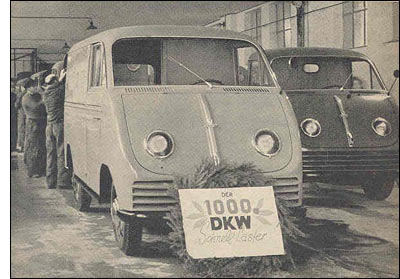 “It’s my tribute to Audi, and all of its success at Sebring,” says the livewire Jeannette Sr. “I found a DKW van, on e-bay, shipped it from California – then wondered what I was going to do with it!” “It’s my tribute to Audi, and all of its success at Sebring,” says the livewire Jeannette Sr. “I found a DKW van, on e-bay, shipped it from California – then wondered what I was going to do with it!”
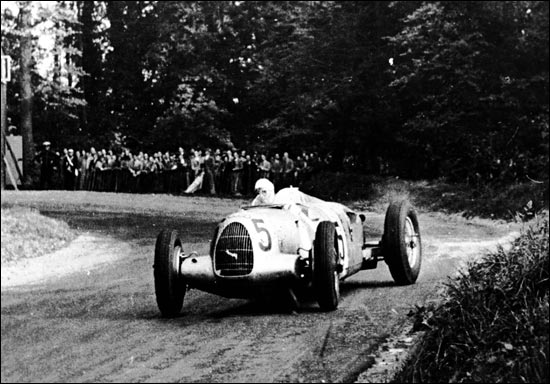
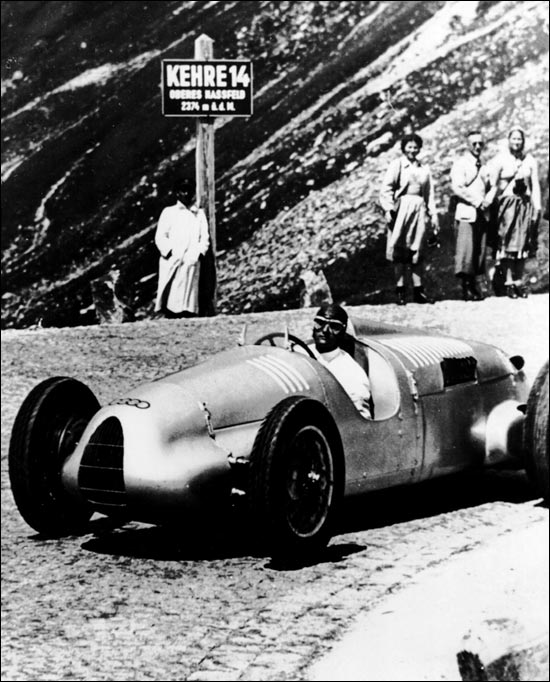
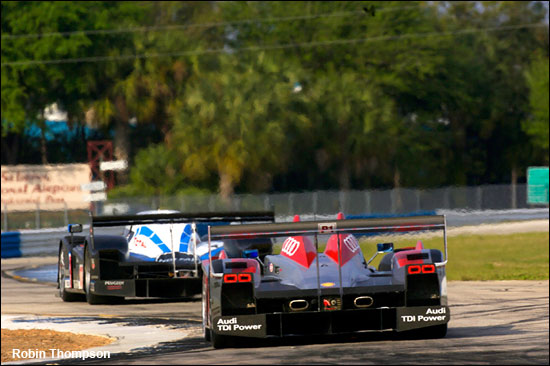
What he didn’t know at the time was that Audi was about to be inducted into the Sebring Hall of Fame – that piece of information simply sealed what became a stunning idea. The little DKW will be on display at the track, and those of you about to head to central Florida will be able to admire it in all its glory – in what is Kevin Jeannette’s tribute to Audi, and everything that came before. Perhaps this summary of the Audi story will add to your understanding of how this incredible company has managed to win the Sebring 12 Hours every year since 2000, which of course includes the first diesel-powered win in sportscar racing. You can purchase Gunnar Racing memorabilia, Joest Racing memorabilia, and Champion items too, in the vicinity of the very special DKW. This chap Jeannette is so well thought of, all his old pals just say “yes” when he asks for their co-operation! “Horch was a great car guy,” explains Kevin Jeannette. Hmm – what is he talking about? What is this Audi story, one that encompasses so many names during the last century or more? August Horch was a highly talented engineer, initially employed by the Benz company – but in 1899, bursting with ideas (a la KJ), he set up Horst und Cie in Cologne, and built his first car a year later. By 1908 his company was building 100 cars a year, and he had invented the OHV engine. He was indeed “quite a guy”. But in 1909, he left his own company: unable to trade as Horch, he chose the Audi name, which means ‘listen’ in English (as in “listen, can you hear the R10 coming?”). Audi is the Latin for Horch. August Horch built the elegant Audi Type K for wealthy customers, and his engineering skills produced fine 8 and 12-cylinder engines. The V12 was a six litre unit, not so very different in its basic swept volume and format from the R10 TDI engine. 1932 was a very significant year in this tale, because Horch, DKW, Wanderer and Audi combined, to form Auto Union AG – hence the four rings. DKW produced the cheaper cars, Wanderer was in the middle, Audi produced the ‘upper mid-range’ cars and Horch was the ‘premium brand’. With a little guidance from a certain Adolf Hitler, Auto Union became the rival for Mercedes Benz in racing, and Hans Stuck, father of ‘our’ Hans Stuck, was one of a select group of brave and highly skilled men who drove these monsters. Ian Wagstaff provided these images, which capture the feel of that era perfectly. But the Second World War inevitably brought an end to racing – but also to Auto Union’s factories. The Russians dissolved the company, but the directors created a new one, Auto Union GmbH, based in Ingolstadt. The company began with austere products, to match the times – and so became the DKW van, production of which began in 1950.
Remarkably, the DKW has a racing connection (other than at Sebring this month), because in 1956, a plastic-bodied DKW set distance records at Monza: 4,000 miles in 48 hours, 5,000 in 72 hours.  Daimler Benz bought 88% of the share capital of Auto Union in 1958, and then began the contruction of a modern plant at Ingolstadt. DKW was sold off to Volkswagen, Auto Union was also absorbed into the VW Group, and in September 1965, Audi launched its first, post-war, four-stroke engine. Daimler Benz bought 88% of the share capital of Auto Union in 1958, and then began the contruction of a modern plant at Ingolstadt. DKW was sold off to Volkswagen, Auto Union was also absorbed into the VW Group, and in September 1965, Audi launched its first, post-war, four-stroke engine.
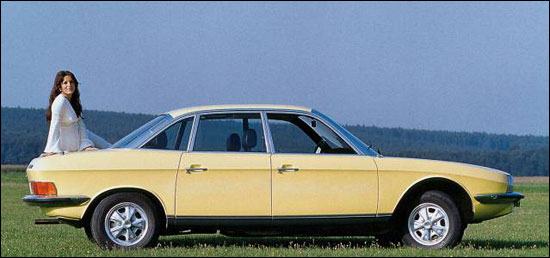
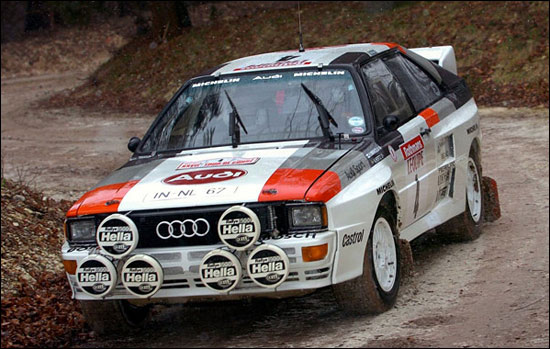
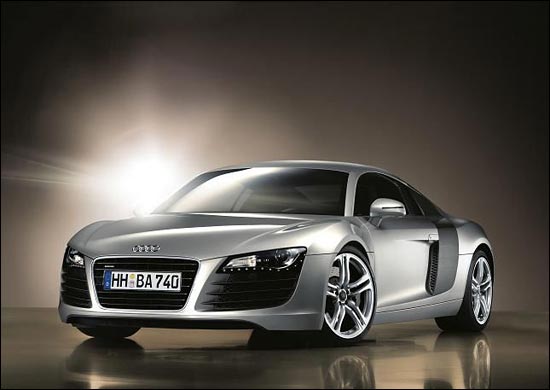
Audi then launched the 75, 60 and 90 models, and the foundations were laid for the whole line of road cars that followed – culminating in the remarkable R8 road car, and the diesel-engined version to come. Auto Union GmbH and NSU combined forces, the latter having suffered owing to the costs involved in developing the Ro80, but the Audi 100, five cylinder engines and then the Audi Quattro demonstrated the expertise that company was capable of engineering into its cars.  Audi NSU Auto Union AG was renamed Audi AG in 1985, and August Horch’s legacy was almost complete. Audi NSU Auto Union AG was renamed Audi AG in 1985, and August Horch’s legacy was almost complete.
But with the Quattro four wheel drive system, Audi was already setting the rallying world alight, and with its Trans-Am cars it was showcasing its technology in North America. Hans Stuck (and others equally significant) continued the story that his father had played such a significant part in. In 1989, Audi introduced the first direct-injection diesel engine. In the 1990s, Frank Biela won the BTCC in an Audi, none other than Stirling Moss raced one too, but in 1999, Audi’s attention focused on Le Mans. They first ran the R8R at Sebring, didn’t win first time out, but returned in 2000 for that virtuoso McNish performance, won the race – and have won the 12 Hours ever since. Enter Kevin Jeannette’s DKW: you won’t believe the livery of this vehicle when you see it. If you’re heading to the track, go and find it. If you’re following the event on the world wide web, look for photographs of it – and very big grins on the faces of the likes of Kevin Jeannette and his old friend Reinhold Joest. If you've been at the track for the event and are reading this because you've picked up a flyer offering a free month's access to dailysportscar, all well and good. Or perhaps you're reading it because it is on the free area of the site? Will it be nine in a row for Audi this week – or will the Peugeot ‘upstarts’ threaten the mighty R10s over 12 hours? Will rain play a role – will that be decisive, in favour of the open cars, against the lone coupe from France? “Vorsprung durch Technik” as they say at Ingolstadt. “Do you like my DKW?” as the man from West Palm Beach says.
It’s all part of the history of the car industry, the history of endurance (the best kind of) racing – and about as far removed from screaming F1 engines in Australia as you can get. What next in the Audi heritage of endurance racing? An R8 GT car perhaps, powered by diesel? And it can all be traced back to old August Horch. |