Short But Sweet – Part One
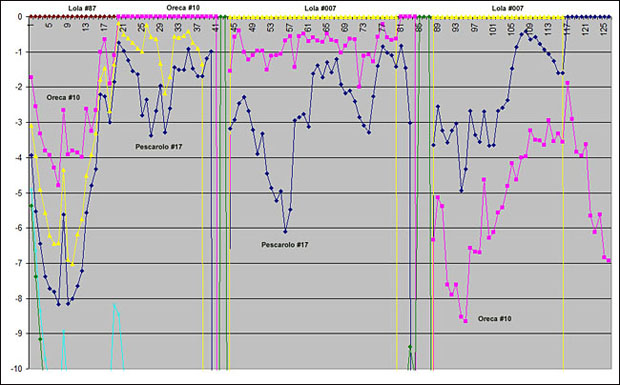
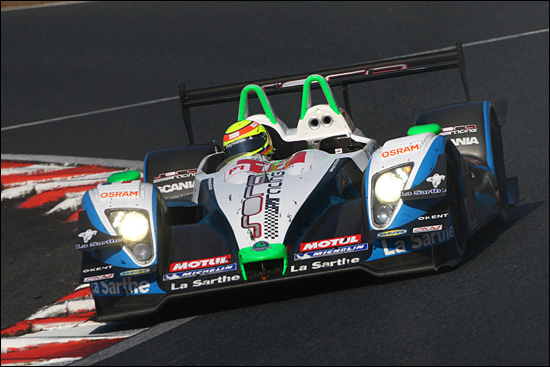
Reviewing The Asian Le Mans Series LMP Classes 23 cars, six hours, two races, one weekend. Doesn’t sound like much of a race series, does it? It could have been an embarrassment, and with two months to go there was real doubt that it would even happen. However, as things turned out, the outcome couldn’t have been more different, and the ACO – much to its great surprise, I believe – found itself on the receiving end of the plaudits after a triumph of a meeting. The reason for the success of the event was down to several factors – most notably the format, the quality of the field, the driving standards and the timetable. Having two three-hour races worked on the Okayama circuit, with two (almost) identical grids producing two very different races. This ‘resetting of the clock’ at three hours made it more than just two halves of a six-hour race, although the pattern of a ‘full’ race was discernible in some places over the course of the weekend. As we shall see shortly, the intense fighting throughout the field – most notably in race one – and the manner in which that fighting was conducted, reflected greatly to the credit of the drivers involved. This was top-notch multi-class racing, with the lead-battles in the classes often overlapping as the faster classes lapped the slower ones on a regular basis. And the timetable played its part too, with the track conditions changing markedly from the afternoon start of race one, to the earlier and cooler start of race two. In this part of the review, we shall take a look at the nine prototype runners. LMP1 Seven cars made up the top class at Okayama, and five of those cars had a significant part to play in the proceedings at one point or another; with the battle for the lead of the class in race one was as good as has been seen anywhere this year. These two graphs from David Legangneux illustrate the intensity of the battle throughout that first encounter. “The first graphic shows the gap up to 60 seconds. It shows well that the winning Pescarolo, the Oreca and the Lola Aston Martin, outside of the normal pit-stops periods, were always within 10 seconds of each other. The Audis weren't able to stay as close, with the gap increasing quickly during the first stint; but during the second stint, while the #14 was soon one lap behind the leader, the #15 reduced the gap, nearly at the same rhythm with which it increased it during the first stint. And then during the 3rd stint, it once again increased, but faster than during the first stint.” “The second graphic shows better the evolution of the gap between the Lola Aston Martin, the Pescarolo and the Oreca.” Car by car: #17 SORA Racing – 1st – 18 points (1st, 2nd) What a shame that Henri was not present to see his car finally win in 2009. Christophe Tinseau may have only led for ten laps during the first race, but they were the ones that mattered – the final ten. Despite a fluffed start in race one, Tinseau never let up in his chase for the lead and – with the solid, if unspectacular, support of Shinji Nakano; here making his first race start since Silverstone 2008 – ensured that the Pescarolo Judd was in the right place at the right time when the Aston hit trouble late in the day. The second race was less dramatic for the SORA duo, but no less important. Both drivers knew that second place would win them the title, and they managed that feat by just eight seconds from the chasing ORECA. But it wasn’t just the drivers who were determining the car’s fate that weekend. The SORA crew set the car up very well for the peculiar conditions of the Japanese track for both races; and efficient work at the stops meant that pit-time was minimised. A real team effort, in other words. Let’s hope that rumours of difficulties for the team are wide of the mark and that we see them once more on the grids of Europe and Asia in 2010. #007 Aston Martin Racing – 2nd – 15 points (4th, 1st) Don’t mention the ‘L’ word (louvre, that is). After another (see Silverstone) inconsistent enforcement of the rules regarding bodywork – the ACO observer at the AMR pit insisting that a mechanical fix be effected to repair damaged louvres, while the one at the Kolles pit was okay with gaffer tape being used– it would be easy to assume that the #007 was robbed of a rightful victory, and ultimately the title, by officialdom; but the real culprit was the Lola Aston Martin’s thirsty motor. With no caution periods occurring during the race, the Lola would have been forced to stop a third time for a splash of fuel, whereas the SORA and ORECA cars could each stay out for an extra lap per stint and thus avoid the need for an extra stop. In other words, third place was the most likely finish for Gulf’s representative in the Far East.  |
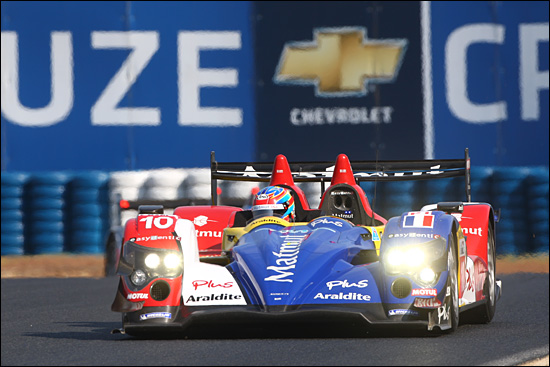
Having said that, Stefan Mücke drove brilliantly throughout his four hours and did all he could to claim the crown. With impressive support from his non-professional teammate, Harold Primat, the German driver took the car to the front in both races; utterly dominating race two having started from fourth. In total, the #007 led for 175 of the 254 laps over the two races. The difference between the two races was that the Lola Aston was able to break free from its pursuers in the second encounter, whereas it was locked in mortal combat for most of the three hours of the first. Taking into account the fact that the car’s aero package was a long way from working to maximum effect on this tight and somewhat slow circuit, this was an excellent way to finish the season. #10 Team ORECA Matmut AIM – 3rd – 14 points (2nd, 3rd) While broken louvres and thirst were AMR’s albatrosses, Hugues de Chaunac’s title hopes were dashed by a bizarre piece of misfortune – rubber pickup finding its way into the ORECA AIM’s air intake and causing the car to stall. This happened very early in Loïc Duval’s stint, at the very point at which he seemed poised to wrest second from Nakano. The extra stop cost the team at least 70 seconds, without which the #10 would have undoubtedly been snapping at the Lola Aston’s heels by the end (the ORECA car finishing 68 seconds behind the winner). In race one, however, when every second was crucial, a slow stop also cost the team a potential victory. But the car ran flawlessly and Lapierre and Duval – who shared the driving time equally – both drove very well. So Hugues had to accept second place to Henri in this particular Gallic contest, but in truth there was very little to choose between the two teams. #15 Kolles – 4th – 10 points (3rd, 5th) Oliver Jarvis impressed on his sportscar debut, driving quickly and consistently in the unfamiliar Audi R10 TDI and keeping the diesel car in podium contention in both races; but the #15 just didn’t have quite enough in reserve to properly engage with the leading P1 runners. Outright pace was sacrificed in a gamble for fuel economy, but the Audi couldn’t use its tyres as well as the lead cars. Christian Bakkerud proved to be the quicker of the two drivers and demonstrated just how far he and the team had progressed since the dark days of Barcelona. And, indeed, the Dane and the Englishman were able to celebrate Kolles’ first and only podium of their 2009 campaign, with third place in race one. #87 Drayson Racing – 5th – 9 points (6th, 4th, pole) The Asian Le Mans races at Okayama may well one day be remembered as the time when the world started to take proper notice of young Jonny Cocker; for he was truly the star of the meeting – taking pole position and setting fastest lap in both races, while also leading both races with hugely impressive assertiveness and confidence. And while the team left Japan with only one trophy – the Michelin Green X Challenge – this was Drayson Racing’s brightest moment by a country mile. There was only one negative throughout the whole weekend – namely, the headlight failure in race one that required an extra stop for a new nose and lost the Lola Judd the lead – but the positives were numerous; the car finished both races; the team learned a huge amount about the new car; and Paul Drayson enjoyed a weekend of continual improvement. Here’s how the UK Science Minister summed up his weekend; “Absolutely brilliant! It’s just so great to be able to end the season on such a high. Jonny made a great start in both races and I was really pleased with my own driving; getting quicker and quicker and feeling able to deal with the traffic much more crisply.  |
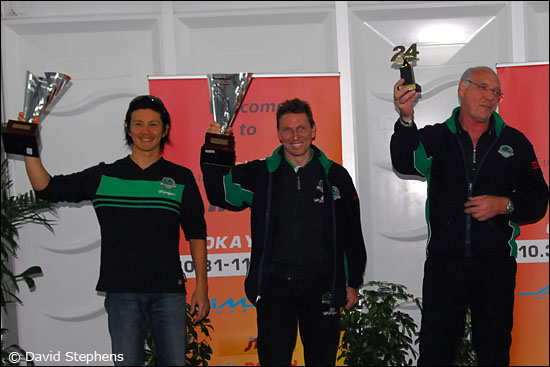
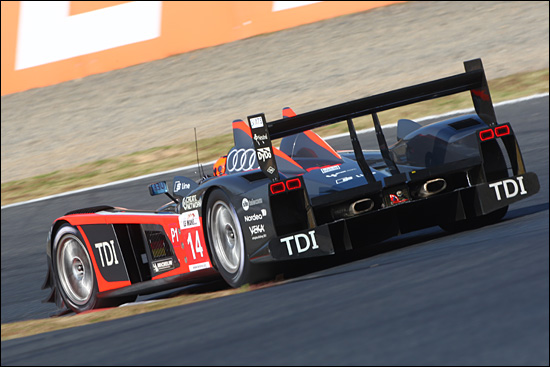
“I’m so delighted with the car and to see it running so competitively. This is a big boost for the team going into the winter – we’ve learned so much about the Lola and now know that is very competitive, very economical and very light on its tyres – and I’m also delighted with the team for the hard work they’ve put in; not just this weekend, but all season long.” #14 Kolles – 6th – 7 points (5th, 6th) With two new drivers in the second Audi, it wasn’t a huge surprise that this car didn’t really feature in the race. Christijan Albers’ two stints were solid enough, but with only a one-hour stint in each race, the car’s regular driver was unable to have a significant impact on the car’s destiny. Matteo Cressoni was unfortunate to have a spin in each race, costing the car more time on each occasion, but it was the general pace of the drivers that determined the #14’s position; with Hideki Noda’s noticeably slower than his teammates, indicating that the experienced local hero really wasn’t able to get to grips with the car. #11 Tokai University YKG Power – 7th – 2 points (7th, DNF) While it was pleasing to see the Tokai University Courage ORECA once again, the car was a long way off the required pace all weekend; so this was more of a test session for the fully-Japanese car. Shogu Mitsuyama was nominally the quicker of the two drivers – his best laptime in race one being 1:26.939; only marginally quicker than the LMP2 OAK Mazda – while teammate Shigekazu Wakisaka did the bulk of the driving; but in truth both drivers were evenly matched. And it was clear that all was not well with the little-used car, with Wakisaka needing an extra stop during his second stint, which contributed to a total pit-time of more than ten minutes; and then, just before the start of the second race, the team discovered a cracked cylinder block and it was game over. The LMP1 class, although small, was one of quality and was also largely evenly matched, producing excellent racing. The question now is – when will we again see these cars together on the same grid? LMP2 #24 Oak Racing – 1st – 21 points (1st, 1st, pole) With only two cars in the class, and with the opposition being a car that was not renowned for its longevity, this was in reality OAK’s race to lose. That this didn’t happen was a demonstration of how far this team has progressed over the course of the 2009 season with the Pescarolo Mazda. The title was thoroughly deserved, with Jacques Nicolet, Richard Hein and Mathieu Lahaye all contributing strong and consistent stints throughout both races. The only problems encountered were a wishbone failure in practice and a fuel-sensor issue during the race. The team overcame these quite happily and were rarely threatened; the #24 going on to become the second Pescarolo to take an AsLMS title. #28 Ibanez Racing Service – 2nd – 16 points (2nd, 2nd) It would be easy to write off this effort as an also-ran, but that would be doing this plucky team a great disservice. First of all, they made the effort to support the series, showing ambition, and then they fielded the many challenges that came their way during the races – most notably suspension damage that led to half-an-hour in the pits in race two – before finishing both events. But they could not overcome the biggest challenge – a fundamental lack of pace compared to the OAK car. José Ibanez, Frederic Da Rocha and newcomer Damien Toulemonde did their best, but the Courage AER was essentially three seconds per lap slower than the Pescarolo Mazda; not something you can make up over the course of one race meeting. MH |